
The metrics your stopwatch
can't catch.
Sprinter is a planned iPhone companion to Sprinting.run. It uses the phone's camera, motion sensors, and AR to measure track & field metrics the web app can't — reaction times, jump power, sprint mechanics, distances. It is not built yet. This page is what I want to build — tell me what's wrong, what's missing, and which one matters most.
Seven things the phone can measure
CNS Tap Test
 Screen tap
Measures
Neural readiness before a session — is the athlete fresh or fried?
At trackside
- 1Athlete taps the screen as fast as they can for 10 seconds
- 2Phone times every tap to the millisecond
- 3A readiness score and trend appear instantly
Beats the stopwatch because
Hand-timing a tap test is impossible — the phone catches sub-frame variation a stopwatch never could.
Readiness
87/ 100
Fresh — clear to train hard
7-session trend
182 ms
Tap speed
6.4%
Consistency
Reaction Time
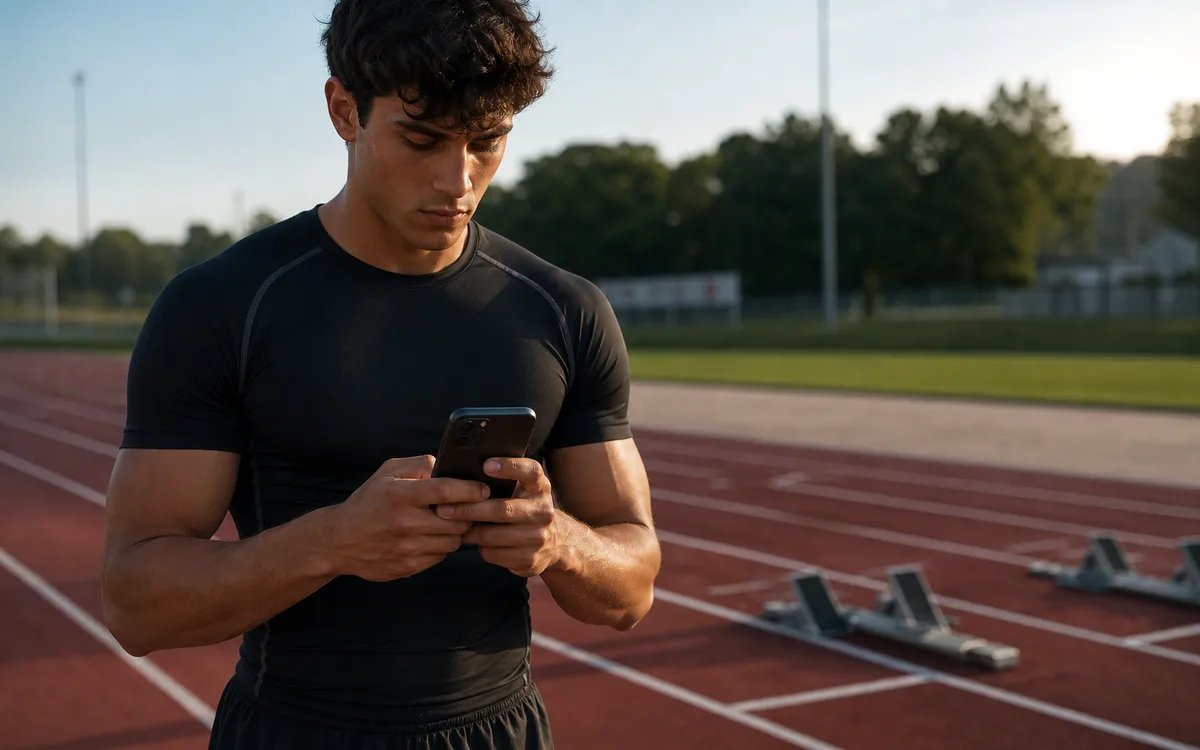 Motion mode
Measures
Reaction to a "go" signal across 5 trials.
At trackside
- 1Pick Motion (phone in hand) or Screen (tap) mode
- 2"Get ready… go!" fires at a random delay
- 3Mean of the middle 3 trials is shown
Beats the stopwatch because
A stopwatch can't measure a 180 ms reaction — the phone resolves it to the millisecond.
Mean reaction
0.180s
Best & worst dropped · mean of middle 3
Block Start
 Block sensor
Measures
Reaction from the gun, plus automatic false-start detection.
At trackside
- 1Phone taped to the block, or held by the coach
- 2"On your marks… set… BANG" cadence plays
- 3Reaction from the gun + a false-start flag if they moved early
Beats the stopwatch because
Catches false starts and gun-to-movement latency a coach's eye simply can't see.
Reaction from gun
0.142s
IMU spike detected 0.08 s before the gun
Plyo RSI
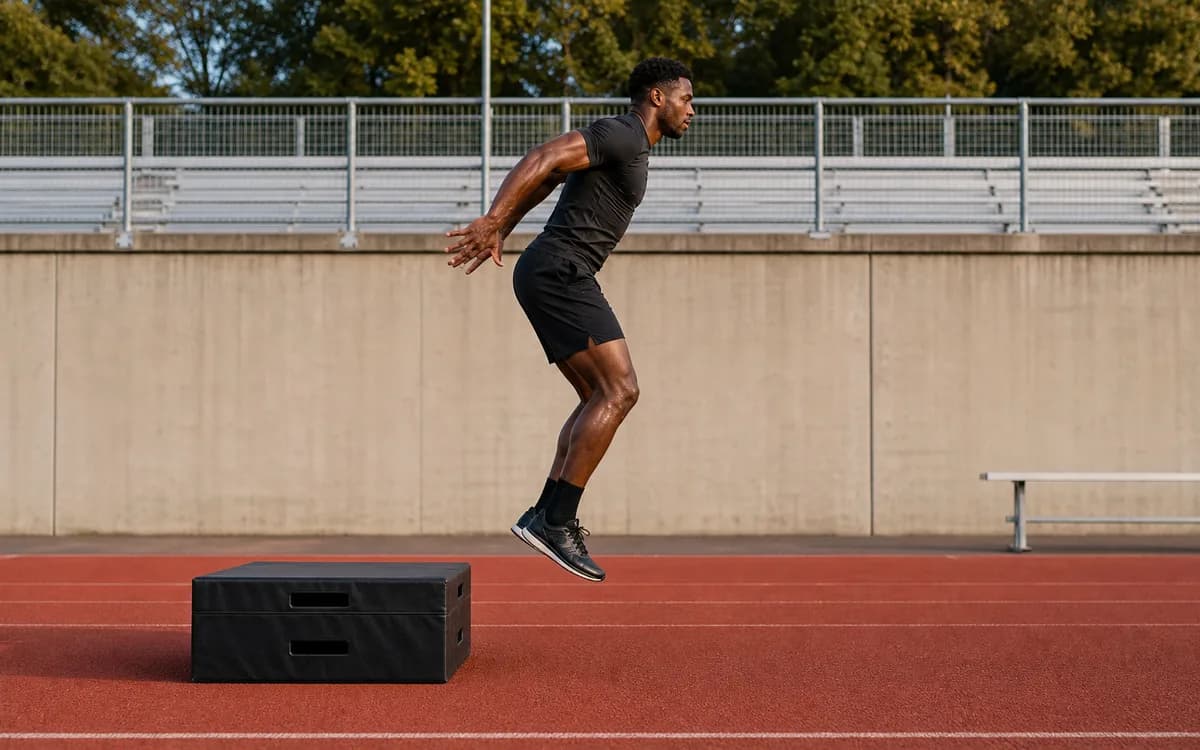 240fps camera POV
Measures
Drop-jump reactive strength index from 240fps video.
At trackside
- 1Film the drop jump at 240 frames per second
- 2Phone finds the takeoff and landing frames
- 3RSI, jump height, and contact time are computed
Beats the stopwatch because
RSI needs flight and contact time to the hundredth of a second — the eye can't do that.
Reactive Strength Index
2.41
42 cm
Jump height
0.18 s
Contact time
Stride Analyzer
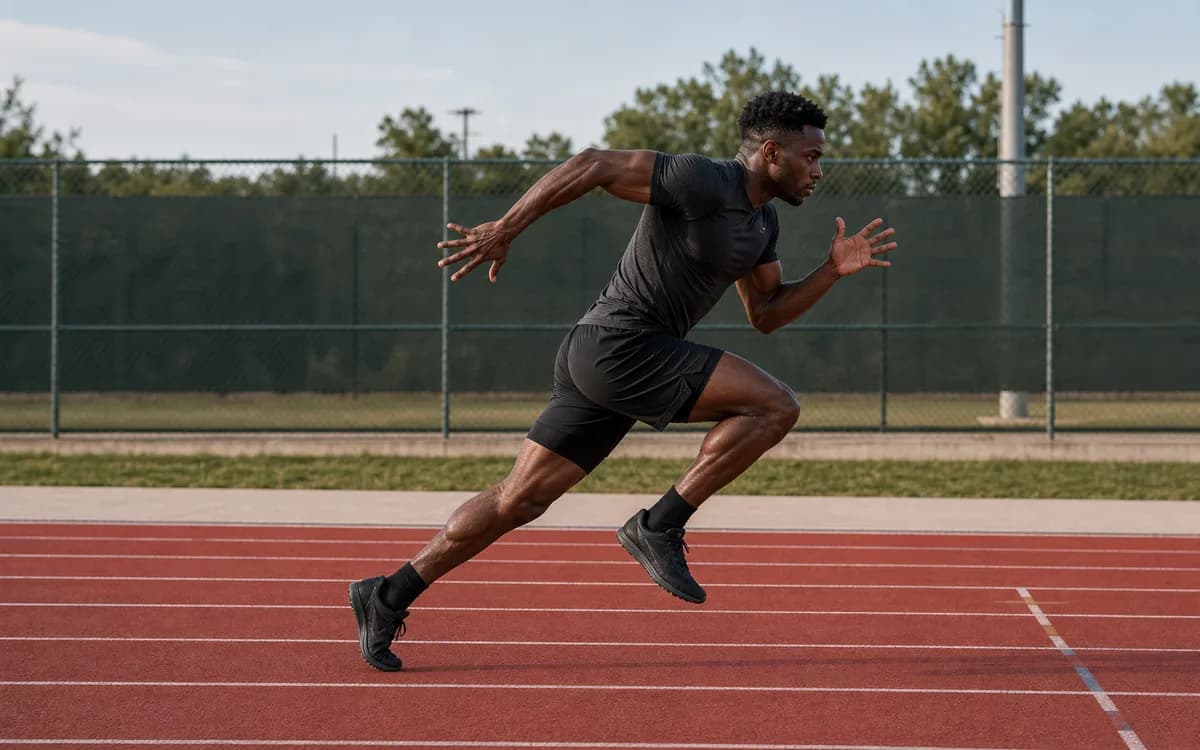 Side-on camera POV
Measures
First-6-stride mechanics from a side-on video.
At trackside
- 1Film the acceleration from the side
- 2Phone overlays a skeleton and joint angles frame-by-frame
- 3Per-step angle table + a shareable overlay video
Beats the stopwatch because
Dartfish-style analysis without Dartfish — every coach films, almost nobody measures the angles.
Stride analysis
Distance Measure
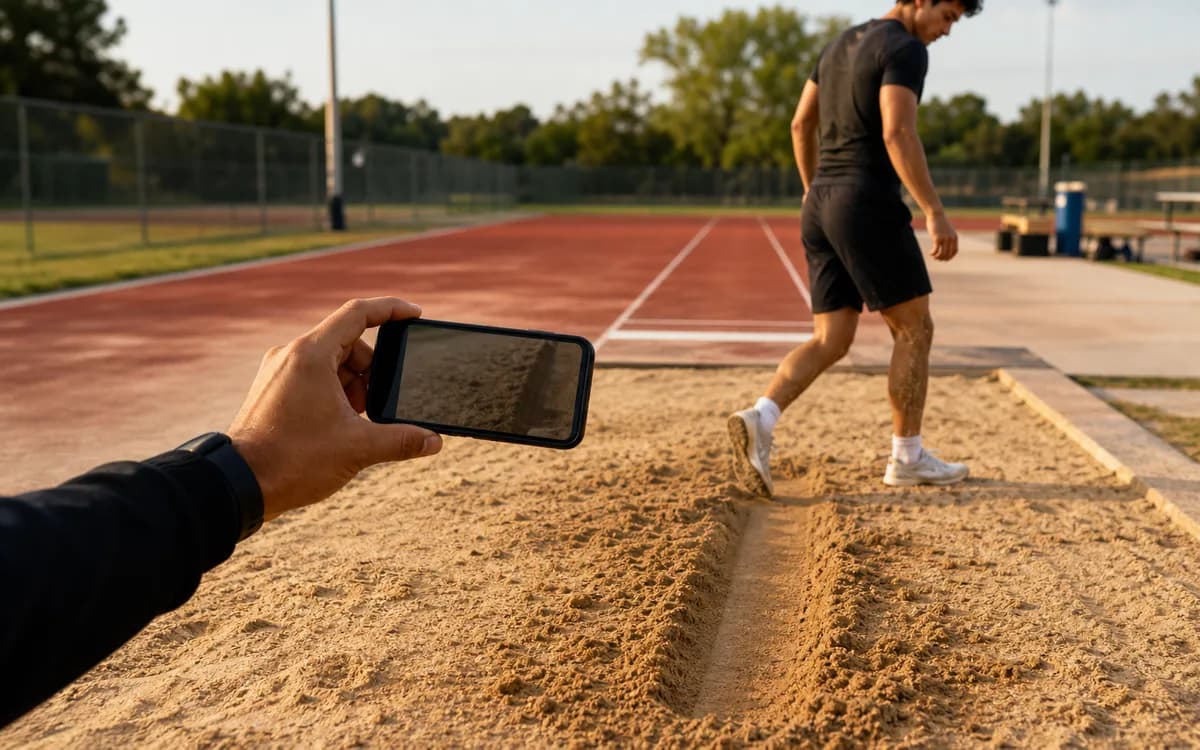 AR measure
Measures
Jump and throw distances using the phone's AR.
At trackside
- 1Tap the start point in the AR view
- 2Walk to the landing point
- 3Tap again — distance in metres
Beats the stopwatch because
A tape measure needs two people and a clear runway; AR needs one phone and ten seconds.
Long jump
6.84m
tap start point → walk → tap landing point
Sprint Timing
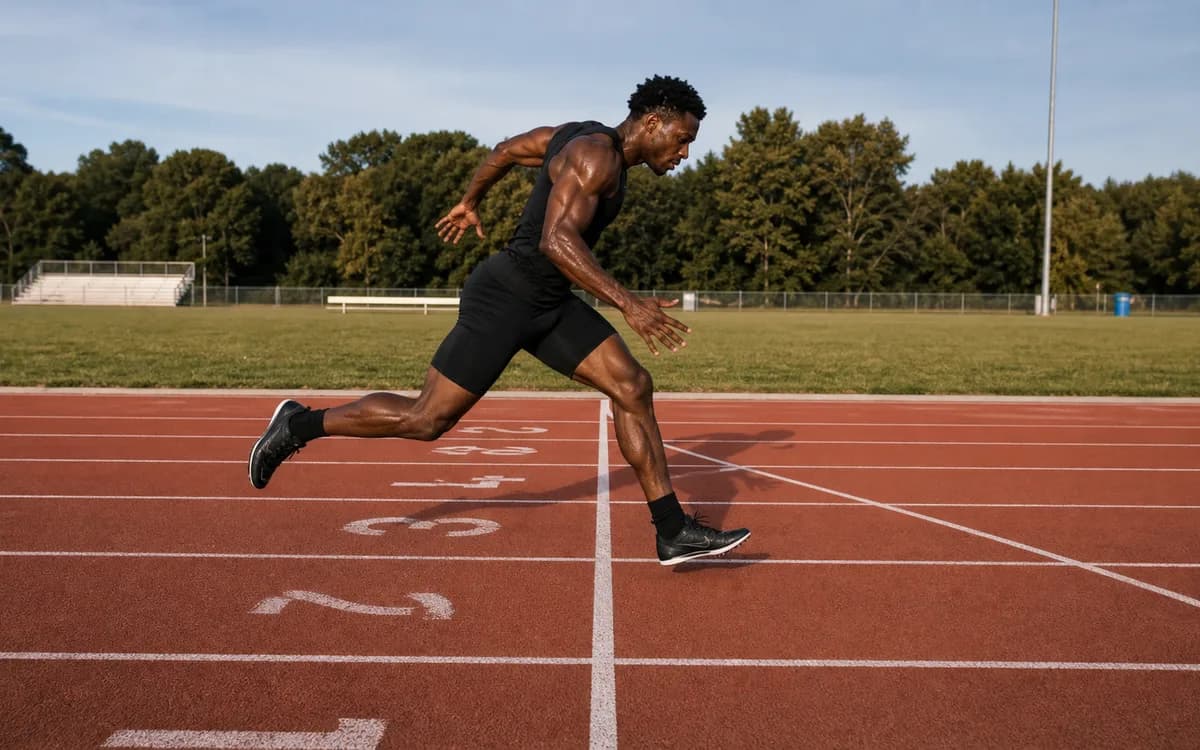 Finish camera POV
Measures
Sprint and split times from two phones — a timing gate without the hardware.
At trackside
- 1One phone at the start, one on a tripod at the finish line
- 2Phones sync their clocks; athlete sprints
- 3Start detected by motion, finish by 240fps video — time + splits
Beats the stopwatch because
Freelap and Brower gates cost thousands; this is two phones a school coach already owns. Not FAT-accurate, but far past a hand stopwatch.
60 m sprint
7.24s
3.18 s
0–30 m split
4.06 s
30–60 m split
IMU start trigger · 240fps finish line
Before I build this:
- 1What's missing — what do you measure by hand today that isn't here? (Heart rate and force plates are deliberately left out of v1 — push back if that's wrong.)
- 2What's useless — which of these would you never use?
- 3Which one first — if I can only build one in the next month, which?
No form here on purpose — tell me directly.
See the coach web walkthrough